
Have you ever woken up from a dream that felt different from an ordinary dream? Maybe you saw a bright light, a familiar person, an animal, a storm, water, a strange place, or a powerful symbol. The dream stayed with you long after you opened your eyes, leaving you wondering, “Could God be trying to show me something?”
This is one reason people search for the biblical meaning of dreams. Dreams appear throughout the Bible in stories involving Joseph, Daniel, Jacob, Solomon, and others. Some dreams carried warnings, some offered guidance, and others revealed something that could not yet be understood.
But does every dream have a spiritual message?
Not necessarily.
A biblical approach to dreams encourages wisdom, prayer, discernment, and humility. A dream can reflect your emotions, memories, fears, hopes, or daily experiences. For some people, it may also become an opportunity for spiritual reflection.
The deeper question is not simply, “What does my dream predict?” It is:
“What might this dream be teaching me about my heart, my choices, my fears, and my relationship with God?”
Understanding the spiritual meaning of dreaming about biblical meaning of dreams can therefore be less about predicting the future and more about discovering meaning, seeking wisdom, and reflecting on your spiritual journey.
What Is the Biblical Meaning of Dreams?
In the Bible, dreams sometimes function as a way through which God communicates with people. However, Scripture also shows that dreams require interpretation and discernment.
Joseph, for example, experienced meaningful dreams when he was young. Later, he became known for interpreting dreams. Daniel also interpreted dreams for kings and emphasized that true wisdom and interpretation ultimately come from God.
This gives us an important principle.
A dream should not automatically be treated as a divine message simply because it feels powerful.
Biblical dream interpretation involves:
- Prayer and spiritual reflection
- Discernment
- Understanding the surrounding circumstances
- Looking at biblical themes
- Examining your emotions
- Avoiding fear-based conclusions
- Considering whether the dream has practical meaning
The biblical meaning of dreams is therefore not a simple dictionary where every symbol has one permanent definition.
For example, water might represent cleansing in one biblical context but danger or overwhelming circumstances in another.
Likewise, a lion might represent strength, authority, or danger depending on the dream and its context.
The meaning depends on the entire picture.
Why Do Dreams Feel So Spiritually Powerful?
Dreams can feel unusually intense because the dreaming mind processes emotions, memories, concerns, and experiences in a different way from waking consciousness.
Psychologically, dreams may help the brain process emotional experiences.
Spiritually, people may interpret dreams as opportunities for reflection, prayer, or personal awareness.
These two perspectives do not always need to compete.
Imagine someone who has been worried about an important decision. During sleep, they dream about standing at a crossroads.
Psychologically, the crossroads may represent their uncertainty.
Spiritually, they might see the dream as an invitation to slow down, pray, and seek wisdom.
The dream does not necessarily tell them exactly which road to take.
Instead, it may encourage deeper reflection.
This is an important distinction when exploring the spiritual meaning of dreaming about biblical meaning of dreams.
The purpose may not be prediction.
It may be understanding.
Biblical Meaning of Dreams and Spiritual Messages
Throughout biblical stories, dreams sometimes communicate themes such as warning, preparation, purpose, protection, transformation, and revelation.
Joseph’s dreams played an important role in his life story. Daniel received dreams and visions that required interpretation. In other biblical passages, dreams appear in connection with divine guidance or significant events.
These examples can make modern dreamers wonder whether their own dreams carry spiritual meaning.
If you have a powerful dream, consider asking:
What emotion remained after I woke up?
Was it peace?
Fear?
Hope?
Confusion?
Grief?
Joy?
Sometimes the emotion provides an important clue.
A dream about losing your home, for example, may not mean that you will literally lose your house. It could reflect insecurity, fear of change, or a feeling that something stable in your life is shifting.
Similarly, dreaming about light may symbolize hope or clarity to you, especially if you have been experiencing confusion.
The dream becomes an invitation to reflect rather than a guaranteed prediction.
Biblical Meaning of Dreams Through a Psychological Lens
Psychology offers another useful way to understand dreams.
During sleep, the brain processes memories and emotions. Dreams can combine unrelated experiences into unusual stories. A person you have not thought about for years may suddenly appear. A familiar house may look completely different. You may experience impossible situations that feel completely real.
This does not automatically make the dream meaningless.
Your mind may use symbolic images to express emotional experiences that are difficult to describe directly.
For example, imagine someone who feels trapped in a stressful relationship. They dream that they are locked inside a room.
The locked room could represent:
- Emotional restriction
- Fear of confrontation
- Feeling powerless
- Difficulty expressing yourself
- A desire for freedom
From a spiritual perspective, the same dream might encourage the person to pray about freedom, wisdom, courage, and healthy boundaries.
The psychological and spiritual interpretations can exist side by side.
Common Biblical Dream Symbols and Their Possible Meanings
Dream symbolism should always be interpreted within context, but certain images have strong biblical associations.
Water
Water appears repeatedly in biblical stories.
It can represent cleansing, renewal, life, danger, or overwhelming circumstances depending on the context.
Dreaming of calm water may feel peaceful and restorative.
Dreaming of being trapped in deep water may reflect emotional overwhelm.
Ask yourself:
“What did the water feel like?”
Your emotional response matters.
Light
Light has powerful biblical symbolism.
It can represent truth, guidance, hope, goodness, understanding, and spiritual awareness.
Dreaming about a bright light after a period of confusion may feel like a symbol of clarity.
Rather than assuming the dream predicts an event, consider whether it reflects your desire for direction.
Darkness
Darkness can symbolize uncertainty, fear, hidden things, confusion, or a period of spiritual searching.
However, darkness does not always represent something evil.
Sometimes darkness simply represents the unknown.
A dream about walking through darkness could reflect a season where you do not yet know what comes next.
Animals
Animals appear in many biblical passages and can carry different symbolic meanings.
A lion may suggest strength or authority.
A lamb may suggest innocence, sacrifice, gentleness, or spiritual symbolism.
A serpent can carry associations with temptation or deception in certain biblical contexts.
But your personal reaction matters too.
If you have always loved dogs, dreaming about a dog may have a very different emotional meaning than it would for someone who fears dogs.
Mountains
Mountains often carry strong spiritual associations in biblical narratives.
They can represent elevation, revelation, closeness to God, challenge, or transformation.
Dreaming about climbing a mountain may reflect a difficult journey toward an important goal.
The mountain may symbolize the challenge rather than a literal future event.
The Emotional Side of Biblical Dreams
One of the most overlooked parts of dream interpretation is emotion.
People often focus on symbols while ignoring how they felt.
Yet emotions can reveal the heart of the dream.
Consider these possibilities:
Fear: You may be dealing with uncertainty, vulnerability, or unresolved anxiety.
Peace: You may be experiencing acceptance, hope, or spiritual reassurance.
Sadness: The dream may connect with grief, loss, or something you have not emotionally processed.
Joy: It may reflect gratitude, hope, connection, or a desire for positive change.
Confusion: You may be struggling with an unanswered question in waking life.
Anger: The dream may reveal frustration, injustice, or suppressed feelings.
When exploring the biblical meaning of dreams, ask not only, “What did I see?”
Ask:
“What did I feel?”
That question can completely change the interpretation.
Biblical Meaning of Dreams and Life Transitions
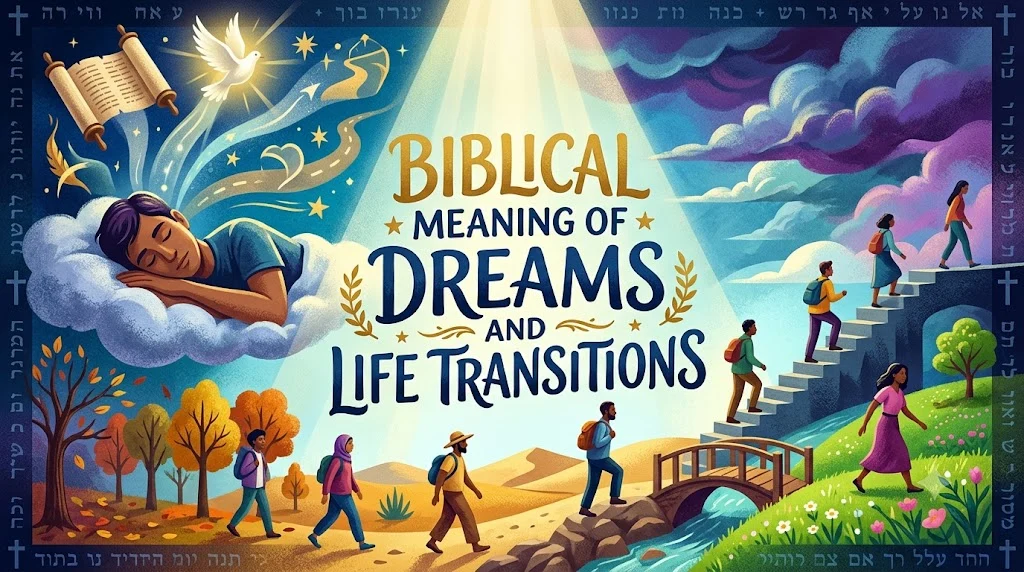
Dreams often become more vivid during major life changes.
You may experience unusual dreams when:
- Starting a new job
- Moving somewhere new
- Entering a relationship
- Ending a relationship
- Facing an important decision
- Experiencing grief
- Beginning a spiritual journey
- Feeling uncertain about the future
- Taking on new responsibilities
During transitions, the mind naturally searches for meaning.
A dream about walking through a doorway may symbolize a new beginning.
A dream about leaving a familiar home may represent emotional growth.
From a spiritual perspective, these images can encourage you to slow down and seek wisdom rather than rushing into decisions.
The Spiritual Meaning of Dreaming About Biblical Meaning of Dreams
The spiritual meaning of dreaming about biblical meaning of dreams can point toward reflection, discernment, transformation, and your relationship with God.
A spiritually meaningful dream may encourage you to examine areas of life that you have ignored.
Perhaps you have been questioning your purpose.
Perhaps you simply need rest.
A dream can bring these concerns into your awareness.
But spiritual interpretation should never become an excuse to live in fear.
If a dream makes you anxious, do not immediately assume something terrible will happen.
Instead, pause.
Pray.
Reflect.
Look at your circumstances.
Seek wise counsel when appropriate.
And remember that one dream does not have to control your future.
Biblical Meaning of Dreams and Chakras or Emotional Blockages
Chakra concepts come primarily from Indian spiritual traditions rather than the Bible, so they should not be presented as biblical teachings. However, if you enjoy exploring dreams through multiple spiritual frameworks, chakra symbolism can provide another reflective lens.
For example, dreams involving the throat may encourage reflection about communication.
Dreams involving the heart may connect symbolically with love, grief, forgiveness, or emotional openness.
Dreams involving the head may represent thoughts, confusion, or mental pressure.
These interpretations are symbolic rather than scientific measurements of spiritual energy.
A useful approach is to combine reflection with your own faith tradition.
For example, if you repeatedly dream about being unable to speak, you might ask:
“Is there something I am afraid to say?”
Then you can bring that question into prayer.
The dream becomes a starting point for self-examination.
When a Dream May Reflect Emotional Blockage
Recurring dreams can sometimes point toward unresolved emotional experiences.
Imagine dreaming repeatedly about running away from something.
The dream might represent:
- Avoidance
- Fear
- Stress
- Unresolved conflict
- A difficult memory
- Pressure from responsibilities
The important question is not necessarily, “What am I running from in the dream?”
It may be:
“What am I avoiding in my waking life?”
This approach can turn dream interpretation into a practical tool for emotional awareness.
You may discover that the dream is encouraging you to face a conversation, acknowledge a feeling, make a decision, or release an old fear.
Cultural Interpretations of Biblical Dreams
Different cultures have developed different approaches to dreams.
In Jewish and Christian traditions, biblical stories provide important examples of dreams and visions.
In Islamic traditions, dreams are also discussed in religious literature, with distinctions between different kinds of dreams and an emphasis on wisdom and interpretation.
Ancient cultures, including Egyptians and Greeks, also placed significant importance on dreams.
Modern Western psychology often views dreams through emotional and cognitive processes.
These traditions should not be treated as identical.
Each has its own history and beliefs.
If you are exploring the biblical meaning of dreams, it is helpful to keep the biblical framework at the center rather than mixing every symbolic system together.
You can learn from different perspectives while still recognizing where their beliefs differ.
Real-Life Example: Dreaming About a Storm
Imagine a person going through a stressful period at work.
One night, they dream about standing beside the sea while a massive storm approaches.
They wake up frightened.
What could it mean?
Psychologically, the storm may represent emotional pressure.
Spiritually, the dream may encourage the person to reflect on how they respond to uncertainty.
The dream does not necessarily mean that an actual storm or disaster is coming.
Instead, the storm may mirror the person’s internal experience.
The deeper message might be:
“You are facing emotional turbulence, and you need to find a place of stability.”
That could lead the dreamer toward prayer, rest, wise decision-making, and emotional honesty.
Real-Life Example: Dreaming About a Door
Another person may dream about standing in front of a closed door.
They try to open it, but it will not move.
Later, they discover that they have been avoiding an important decision in their life.
The closed door may symbolize uncertainty or perceived limitation.
From a spiritual perspective, they might reflect on whether they are waiting for direction or simply afraid to move forward.
The dream does not have to tell them what decision to make.
Instead, it may help them recognize the emotional barrier preventing action.
Real-Life Example: Dreaming About Light
Imagine someone experiencing a difficult season.
They feel uncertain about their future and pray for guidance.
That night, they dream about walking through a dark place until they see a warm light in the distance.
They wake up feeling peaceful.
From a psychological perspective, the dream may reflect their longing for hope.
From a spiritual perspective, they may see it as an encouraging image connected with their faith.
The healthiest response may be gratitude and reflection rather than making a dramatic prediction.
The dream can remind them:
Even when the path is unclear, hope can still exist.
How to Interpret a Biblical Dream Wisely

If you have a dream that feels spiritually important, try this simple process.
1. Write the dream down
Record the details as soon as you wake up.
Dream memories disappear quickly.
2. Identify the strongest emotion
Ask whether you felt afraid, peaceful, confused, excited, sad, or hopeful.
3. Notice the major symbols
Look for important people, places, animals, colors, objects, or actions.
4. Consider your current life
What is happening around you right now?
Dreams often connect with current emotional experiences.
5. Reflect through Scripture and prayer
If your faith is Christian, consider biblical themes that relate to the dream.
Do not force a connection simply because one exists.
6. Avoid absolute predictions
A dream is not automatically a prophecy.
Be cautious about anyone who claims complete certainty about your future based on one dream.
7. Look for practical wisdom
Ask:
“What positive action could this reflection inspire?”
That question can make dream interpretation much more meaningful.
Five Questions to Ask After a Powerful Dream
When you wake from a memorable dream, consider these questions:
- What was the strongest emotion?
- Which symbol stood out most?
- What is happening in my life right now?
- What biblical theme does this remind me of?
- What can I learn without assuming the dream predicts the future?
These questions help create balance.
Dreams can be meaningful without becoming frightening.
FAQs About the Biblical Meaning of Dreams
1. Does every dream have a biblical meaning?
No. The Bible contains meaningful dreams, but it does not teach that every modern dream is a direct message from God. Dreams can also arise from emotions, memories, stress, and everyday experiences.
2. Can God speak through dreams?
Within the biblical tradition, dreams are sometimes presented as a means of divine communication. However, discernment is important. A dream should not automatically be treated as a message from God simply because it feels vivid or emotional.
3. What does it mean when a dream feels extremely real?
A vivid dream can feel real because the brain can create powerful emotional and sensory experiences during sleep. Spiritually, you may choose to reflect on why the dream affected you so strongly, without assuming that its vividness proves a supernatural origin.
4. Should I make an important decision based on a dream?
It is generally wiser not to make major life decisions based only on a dream. Consider your circumstances, values, prayer, reliable information, and wise counsel. A dream can encourage reflection, but it should not replace careful judgment.
5. What should I do after a disturbing dream?
First, remind yourself that a disturbing dream does not automatically predict a disturbing event. Take a moment to calm yourself, write down the dream, reflect on its emotional themes, and pray if that is meaningful to you. If nightmares become persistent or seriously affect your sleep or daily life, consider speaking with a qualified professional.
Conclusion
Dreams can open a fascinating window into our emotions, memories, fears, hopes, and spiritual questions. The biblical meaning of dreams reminds us that dreams have appeared in important biblical stories, but it also invites us to approach them with wisdom and discernment.
Not every dream is a prophecy.
Not every symbol has one fixed meaning.
And not every frightening dream should be feared.
Sometimes the most valuable part of a dream is the question it creates inside you.
Perhaps it encourages you to forgive.
Perhaps it simply gives you space to process something your waking mind has been carrying.
When you explore the spiritual meaning of dreaming about biblical meaning of dreams, try to approach the experience gently. Write your dream down. Notice your emotions. Reflect on your current circumstances. Pray if it aligns with your faith. Look for wisdom rather than fear.
Most importantly, allow the dream to become a moment of reflection rather than something that controls your future.
Sometimes the deepest meaning of a dream is not found in predicting what will happen tomorrow.
It is found in understanding what your heart is experiencing today.