Have you ever woken up with a strange feeling that something important came to you in a dream? Maybe it was a person, a message, an idea, a place, or even a simple sentence that stayed in your mind long after you opened your eyes. You may have wondered, “Was my dream trying to tell me something?”
The phrase it came to me in a dream often describes an experience that feels unusually meaningful. Spiritually, such dreams may be connected with intuition, emotional processing, personal growth, or a desire for guidance. Psychologically, dreams can also help the mind organize memories, feelings, fears, and ideas.
Not every meaningful dream is a prediction or supernatural message. Sometimes, your subconscious simply brings something into awareness that you have been thinking about without realizing it.
Understanding the context is important. What came to you? How did you feel? Was the experience peaceful, frightening, inspiring, or confusing? These details can reveal what the dream may symbolize in your emotional and spiritual journey.
What Does “It Came to Me in a Dream” Mean Spiritually?
The spiritual meaning of it came to me in a dream can relate to intuition, inner guidance, reflection, or a new awareness.
Throughout history, people have viewed dreams as experiences that can carry personal or spiritual significance. A dream may feel like a quiet conversation with your inner self, especially when it presents an idea or image that you were not consciously expecting.
Spiritually, the experience may symbolize:
- A need for guidance
- Personal transformation
- Increased intuition
- Emotional healing
- A new perspective
- A desire for clarity
- Reflection on your life path
However, spiritual symbolism should not automatically be treated as proof that a dream predicts the future. A meaningful dream can be valuable without being prophetic.
Sometimes, its purpose is simply to help you notice something you have been overlooking.
It Came to Me in a Dream and the Power of Intuition
One reason people describe dreams as messages is that dreams can sometimes produce sudden insights.
You might struggle with a decision during the day and then wake up with a surprisingly clear idea. This can feel as though the answer “came to me in a dream.”
Psychologically, your brain may have continued processing the problem while you slept. When you woke, the result could feel sudden because you were not consciously aware of the mental work happening in the background.
Spiritually, you might interpret the same experience as intuition becoming clearer.
Both perspectives can coexist. The important question is not whether you must choose one explanation, but what the insight means for your life.
Psychological Meaning of “It Came to Me in a Dream”
Dreams are closely connected with memory, emotion, imagination, and subconscious processing.
During sleep, the brain can combine different experiences in unusual ways. A person you have not thought about for years may appear. A forgotten conversation may return. Several unrelated ideas may become one vivid scene.
This can create the powerful sensation that something has been delivered directly to you.
For example, an artist may dream of an image that inspires a painting. A student may dream about a solution to a problem. Someone facing a difficult decision may wake up with a new way of looking at the situation.
The dream may not have created the information from nothing. Instead, it may have connected pieces of knowledge that were already present in the mind.
When It Came to Me in a Dream Feels Like a Message
Some dreams feel different from ordinary dreams.
They may be unusually vivid, emotionally intense, simple, or memorable. Instead of a complicated story, you might receive a single sentence, image, name, or feeling.
When this happens, it is understandable to wonder whether the dream has a deeper meaning.
A useful approach is to write down exactly what happened before interpreting it.
Ask:
- What did I see?
- What did I hear?
- Who appeared?
- What emotion did I experience?
- What was happening in my life at the time?
- Why might this particular message matter to me?
Recording the dream before your memory fades can prevent your waking thoughts from changing the original experience.
It Came to Me in a Dream and Your Life Path
Dreams sometimes appear during major transitions.
You might be choosing a career, beginning a relationship, ending an old chapter, moving somewhere new, or questioning what you really want.
During these periods, the mind naturally searches for direction.
The phrase it came to me in a dream may therefore reflect a deeper desire for clarity about your life path.
A dream about a road could symbolize choices. A dream about opening a door could represent opportunity.
These symbols are not fixed predictions. Their meaning depends on your personal associations.
Your dream may be encouraging you to explore possibilities rather than giving you a specific instruction.
Cultural Interpretations of Meaningful Dreams
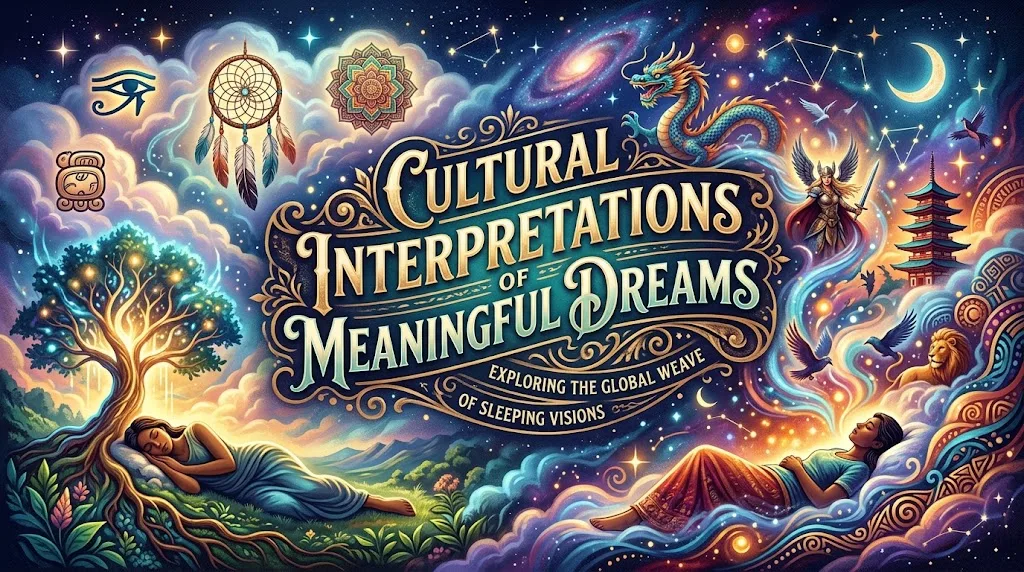
Many cultures have traditions in which dreams are treated as meaningful experiences.
Some religious and spiritual traditions distinguish between ordinary dreams, dreams influenced by personal thoughts, and dreams believed to carry spiritual significance. Interpretations can vary widely between cultures and individuals.
In Islamic traditions, dreams have historically received attention, and classical discussions describe different kinds of dreams. However, not every dream is considered a divine message, and interpretation depends on context.
Similarly, many other cultures have viewed dreams as opportunities for guidance, communication, self-reflection, or connection with the spiritual world.
The safest approach is to respect cultural traditions without assuming that every dream has a supernatural source.
A meaningful dream can still offer emotional and spiritual value even when its origin remains uncertain.
It Came to Me in a Dream and the Heart Chakra
From a chakra-based spiritual perspective, meaningful dreams can sometimes be explored through emotional themes.
The heart chakra is traditionally associated with love, compassion, connection, forgiveness, and emotional openness.
If someone repeatedly dreams about a person they love, a lost relationship, forgiveness, or emotional reunion, they may use heart-chakra symbolism to reflect on those feelings.
The dream could encourage questions such as:
- Is there someone I need to forgive?
- Am I carrying unresolved sadness?
- Do I need to express love or appreciation?
- Am I protecting myself from emotional connection?
Chakra interpretations are spiritual frameworks rather than scientifically established methods of diagnosing emotional problems. They can nevertheless provide a reflective language for exploring feelings.
It Came to Me in a Dream and Emotional Blockages
Sometimes a dream brings an emotion to the surface that you have been avoiding.
You may wake up crying without understanding why. You may dream about someone from your past and suddenly feel sadness.
These experiences can indicate that your mind is processing unresolved emotions.
An emotional blockage does not necessarily mean something is wrong with you. It can simply mean that an important feeling has not received enough attention.
Journaling, prayer, meditation, creative expression, or talking with someone you trust can help you explore those emotions.
The dream may be the beginning of reflection rather than the final answer.
It Came to Me in a Dream as a Creative Breakthrough
Not every meaningful dream is emotional or spiritual.
Sometimes an idea simply appears.
Writers, artists, musicians, scientists, and other creative people have described experiences in which dreams influenced their work. The sleeping mind can combine memories and concepts in unexpected ways.
You might dream about:
- A story idea
- A design
- A song
- A solution
- A new business concept
- A name
- A visual image
If something useful comes to you in a dream, write it down immediately.
Even if the idea seems strange at first, it may become meaningful after you examine it while awake.
Real-Life Example: A Dream About an Old Friend
Imagine someone who suddenly dreams about an old friend they have not spoken to for years.
In the dream, they have a peaceful conversation and wake up feeling emotional.
The experience might lead them to ask why that person appeared.
Perhaps the friendship represents a happier period of life. Perhaps there are unresolved feelings. Or perhaps the dream simply brought an old memory back to consciousness.
Spiritually, the person might interpret the dream as an invitation to reconnect with an important part of themselves.
The key is not necessarily the friend. It may be what that friendship represents.
Real-Life Example: A Dream About a Career Decision
Consider someone who cannot decide whether to accept a new job.
After thinking about the decision for weeks, they dream that they are walking through two different doors. One door feels dark, while the other leads into a bright open space.
They wake up feeling surprisingly confident about what they want.
The dream may reflect subconscious preferences rather than supernatural prediction.
The person has been thinking about the decision for a long time. Their sleeping mind may have transformed that internal conflict into a simple visual story.
The dream becomes useful because it reveals how they feel.
Real-Life Example: A Dream That Inspires Spiritual Reflection
Another person may dream about sitting peacefully beside a river while feeling completely calm.
After waking, they realize that their daily life has become extremely stressful.
The dream encourages them to reconsider how they are spending their time.
They begin creating more space for prayer, reflection, nature, and rest.
In this example, the dream does not need to predict anything to have a meaningful impact. It becomes a mirror showing the person what their inner world may be craving.
Why Do Some Dreams Feel More Meaningful Than Others?
Certain dreams remain memorable because they contain strong emotions or unusual imagery.
A dream may feel especially significant when:
- It is extremely vivid
- You remember it for days
- It produces strong emotions
- It contains a clear message
- It connects with a current life situation
- You wake immediately afterward
- You experience the same theme repeatedly
However, vividness alone does not prove that a dream is supernatural.
Your brain naturally remembers emotionally powerful experiences more strongly than ordinary ones.
The best approach is curiosity rather than fear.
How to Understand What Came to You in a Dream
If something important came to you in a dream, slow down before assigning a meaning.
Start by writing the dream exactly as you remember it.
Then consider three layers.
First, the emotional layer: What did you feel?
Second, the personal layer: What does the person, object, or situation represent to you?
Third, the spiritual layer: Does the dream connect with your beliefs, values, prayers, or current search for meaning?
Looking at all three layers can create a richer interpretation than relying on a dream dictionary alone.
Should You Follow a Message That Came in a Dream?
This is an important question.
A dream can inspire reflection, but major life decisions should not be based solely on a dream.
If you dream about changing careers, ending a relationship, moving somewhere, or making another significant decision, consider the practical facts while awake.
Ask:
- Is this choice consistent with my values?
- What are the real-world consequences?
- Have I considered the risks?
- What evidence supports this decision?
- How do I feel about it when I am fully awake?
A dream can be one piece of reflection, but it should not replace careful judgment.
FAQs About It Came to Me in a Dream
1. What does “it came to me in a dream” mean spiritually?
It can symbolize intuition, inner guidance, emotional awareness, or a desire for spiritual clarity. The meaning depends on what appeared in the dream and how you experienced it.
2. Can dreams give you answers?
Dreams can sometimes help you see a problem differently or connect ideas that you were already processing. However, they should not automatically be treated as guaranteed supernatural answers.
3. What does it mean when a person comes to you in a dream?
A person may symbolize memories, emotions, relationships, qualities you associate with them, or unresolved feelings. Their appearance does not necessarily mean they are spiritually communicating with you.
4. Is every meaningful dream a spiritual message?
No. Dreams can result from memories, emotions, stress, imagination, and ordinary brain activity during sleep. Some people interpret certain dreams spiritually, while others understand them psychologically.
5. What should I do if a dream feels extremely important?
Write it down, reflect on your emotions, and consider how it relates to your waking life. If the dream suggests a major decision, evaluate that decision carefully rather than relying on the dream alone.
Conclusion
The experience of it came to me in a dream can feel mysterious, beautiful, and deeply personal. Whether you understand such a dream through spirituality, psychology, or both, it can become an opportunity for meaningful self-reflection.
A dream may reveal an emotion you have ignored, an idea you have not fully developed, or a question that your waking mind has been avoiding. Sometimes it feels like guidance. Other times, it is simply your subconscious connecting memories and experiences in a new way.
You do not have to decide immediately whether a dream was supernatural or psychological. Give yourself permission to explore it gently.
Ask what the dream awakened within you. Notice what emotion remained after you woke. Consider what is happening in your life right now.
Most importantly, do not let an unusual dream create unnecessary fear. Let it encourage curiosity, reflection, and self-awareness.
Sometimes, the most meaningful part of a dream is not the message itself, but the new question it inspires you to ask about your life.