
Dreams have fascinated humanity for centuries. Many people wake up after a vivid dream wondering, “Was this just my imagination, or is Allah trying to tell me something?” If you’ve ever searched for the Islamic meaning for dreams, you’re not alone. Across the Muslim world, dreams are viewed with respect because some dreams can carry guidance, warnings, or glad tidings, while others simply reflect our daily thoughts and emotions.
In Islam, dreams are not all equal. Some are believed to come from Allah as a source of comfort or direction, while others may arise from our subconscious mind or even from Shaytan to create fear or confusion. Understanding the difference requires wisdom, patience, and spiritual awareness rather than rushing to conclusions.
From a psychological perspective, dreams often process emotions, memories, and unresolved experiences. Spiritually, however, they may encourage self-reflection, strengthen faith, or remind us to return to Allah. This guide explores the Islamic meaning for dreams through both spiritual and psychological lenses, while also considering cultural beliefs, emotional symbolism, and practical lessons you can apply to your life.
Understanding the Islamic Meaning for Dreams
Islam gives dreams an important place but also teaches balance. Not every dream carries a divine message.
According to Islamic teachings, dreams generally fall into three categories:
- True dreams (Ru’ya Saliha): Good dreams from Allah that bring peace, hope, or guidance.
- Dreams from Shaytan: Frightening dreams meant to disturb or create anxiety.
- Dreams from the self (Nafs): Reflections of daily thoughts, worries, desires, or memories.
The Prophet Muhammad (peace be upon him) taught that good dreams should be appreciated, while disturbing dreams should not be shared widely. Instead, one should seek Allah’s protection and avoid becoming overwhelmed by fear.
This balanced approach reminds believers that dreams can be meaningful without allowing them to control every decision in life.
Psychological and Spiritual Symbolism Behind Dreams
Modern psychology views dreams as the brain’s natural way of organizing experiences, processing emotions, and solving internal conflicts.
Spiritually, Islam encourages believers to examine dreams through the lens of faith rather than superstition.
A meaningful dream may represent:
- Personal growth
- Repentance
- Inner healing
- Spiritual awakening
- Hope during difficult times
- Reminder to increase worship
- Encouragement to trust Allah
For example:
Dreaming about clear water may symbolize inner purification.
Dreaming about light can represent hope, guidance, or increased faith.
The combination of psychological understanding and Islamic teachings provides a healthy, balanced interpretation.
Common Islamic Dream Symbols and Their Meanings
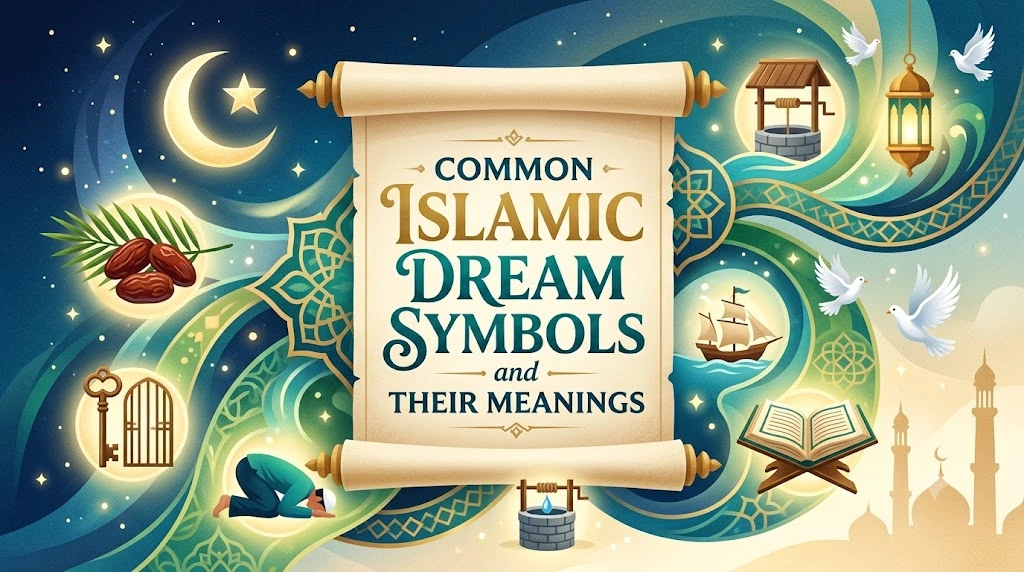
Many dream symbols appear repeatedly throughout Islamic traditions. While meanings vary depending on personal circumstances, some themes remain common.
Water
Water often symbolizes purification, mercy, knowledge, and blessings.
Calm water may reflect emotional peace.
Dirty water may indicate stress, confusion, or spiritual struggles.
Light
Light frequently represents guidance from Allah, increased faith, wisdom, and hope.
Mosques
Seeing a mosque may indicate spiritual growth, community, or a reminder to strengthen worship.
Prayer
Dreaming about Salah often reflects a desire to reconnect with Allah or improve one’s religious commitment.
The Quran
Seeing or reading the Quran in dreams generally symbolizes knowledge, protection, healing, and guidance.
Rain
Gentle rain commonly represents mercy, answered prayers, and blessings.
Heavy destructive rain may symbolize challenges requiring patience.
Cultural Interpretations of the Islamic Meaning for Dreams
Across Muslim cultures, dream interpretation has developed unique traditions while remaining rooted in Islamic principles.
Middle Eastern Traditions
Dreams are often viewed as opportunities for reflection rather than absolute predictions.
South Asian Communities
Many families consult knowledgeable scholars when dreams seem unusually meaningful.
African Muslim Traditions
Dreams sometimes emphasize ancestral wisdom, gratitude, and reliance on Allah during hardships.
Southeast Asian Perspectives
Dreams are often connected with personal spiritual growth, family harmony, and moral character.
Despite cultural differences, genuine Islamic teachings encourage careful interpretation rather than blind belief in every dream.
Emotional Healing and Chakra Connections
Although chakras originate from Eastern spiritual traditions and are not part of Islamic theology, some readers find them useful as a symbolic way to describe emotional wellbeing. They should be understood as emotional metaphors rather than Islamic beliefs.
Heart Chakra
Dreams involving forgiveness, family, or compassion may reflect emotional healing around love and relationships.
Throat Chakra
Dreams about speaking, silence, or communication may symbolize the need to express honest feelings.
Third Eye Chakra
Dreams involving wisdom or insight may represent growing self-awareness and clearer decision-making.
Root Chakra
Dreams about homes, safety, or stability often relate to security, trust, and life’s foundations.
For Muslims, true spiritual healing comes through prayer, remembrance of Allah, sincere repentance, and reliance upon Him. Emotional symbolism can simply complement—not replace—Islamic faith.
Real-Life Examples of Islamic Meaning for Dreams
Example 1: Dream of Praying Peacefully
Ahmed repeatedly dreamed of praying in a beautiful mosque.
Psychologically, this reflected his desire for inner peace after months of work stress.
Spiritually, the dream encouraged him to become more consistent with daily prayers. As he improved his worship, he found greater emotional stability.
Example 2: Dream of Rain
Fatima dreamed of gentle rain falling over her family home.
She had been struggling with anxiety after losing her job.
She later interpreted the dream as a reminder that Allah’s mercy arrives even during uncertainty. The dream inspired patience and optimism.
Example 3: Dream of Darkness Turning into Light
A university student dreamed of walking through darkness before seeing a bright sunrise.
Emotionally, the dream represented overcoming depression and confusion.
Spiritually, it reminded him to place greater trust in Allah while continuing practical efforts to improve his situation.
Example 4: Dream About Reading the Quran
One woman dreamed she was reading the Quran with complete concentration.
Although she had become distant from regular recitation, the dream motivated her to rebuild that habit.
Within weeks she noticed increased peace, patience, and confidence.
How Should Muslims Respond to Meaningful Dreams?
Islam teaches a practical and balanced response.
If the dream is good:
- Thank Allah.
- Feel hopeful.
- Share it only with trustworthy people.
- Continue doing righteous deeds.
If the dream is disturbing:
- Seek refuge in Allah.
- Recite protective supplications.
- Do not become obsessed with the dream.
- Avoid assuming it predicts the future.
Most importantly, remember that dreams should never replace guidance from the Quran, Sunnah, prayer, wisdom, or sound decision-making.
Life Lessons Hidden Within Dreams
Many dreams simply encourage personal reflection rather than predicting future events.
Ask yourself:
- Am I neglecting my relationship with Allah?
- Do I need forgiveness?
- Is stress affecting my emotional health?
- Am I ignoring important responsibilities?
- What positive changes can I make today?
Sometimes the greatest value of a dream lies not in decoding every symbol but in inspiring positive action.
Dreams can become opportunities for gratitude, repentance, healing, and renewed faith.
Frequently Asked Questions
1. Does every dream have an Islamic meaning?
No. Islam teaches that dreams may come from Allah, from Shaytan, or simply from one’s own thoughts and experiences.
2. Can dreams predict the future?
Some true dreams may contain signs or glad tidings by Allah’s permission, but Islam does not encourage treating every dream as a prophecy.
3. Should I tell everyone about my dream?
Only good dreams should be shared with trustworthy people. Disturbing dreams are generally better kept private after seeking Allah’s protection.
4. What should I do after a bad dream?
Seek refuge in Allah, recite protective prayers, avoid dwelling on the dream, and continue your normal life with trust in Allah.
5. Is dream interpretation always accurate?
No. Dream interpretation is not an exact science. Meanings depend on personal circumstances, spiritual condition, emotions, and context.
Conclusion
Understanding the Islamic meaning for dreams requires both faith and wisdom. Islam teaches that dreams can sometimes bring encouragement, reminders, or comfort, but they should never replace the clear guidance found in the Quran and Sunnah. At the same time, psychology reminds us that dreams often reflect our emotions, fears, hopes, and unresolved experiences.
Rather than becoming anxious over every symbol, allow your dreams to inspire thoughtful self-reflection. Ask whether they encourage you to strengthen your relationship with Allah, improve your character, seek forgiveness, or care for your emotional wellbeing. Whether a dream carries spiritual significance or simply mirrors your subconscious mind, it can still become an opportunity for personal growth.
Trust Allah’s wisdom, remain grounded in authentic Islamic teachings, and approach every dream with patience instead of fear. The most meaningful transformation comes not from interpreting every dream perfectly but from living each day with sincerity, gratitude, and faith. When your heart stays connected to Allah, you will find peace that extends far beyond the world of dreams.